SINGAPORE · ROOF INSULATION
A cooler factory starts
with the roof and walls.
For factories and warehouses in Singapore: identify where heat enters, then plan reflective-barrier work to reduce the load on air conditioning.
Local SMEs & Japanese companies · mainly low-rise facilities with roofs of approximately 800–2,000 m²
01 · BUILDING FIT
Find the heat source
before choosing a material.
Where a radiant barrier may help
- Sun-exposed metal roofs or walls are a major heat path
- Air-conditioned offices, warehouses or work areas
- Roof construction, air-gap space and access can be assessed
Where envelope work alone may have limited benefit
Factories where furnaces, ovens or production equipment are the main heat source. Heat-source control, extraction and ventilation need to be considered as part of the assessment.
Reflective sheets limit radiant heat transfer at an aluminium surface facing an air gap. The air gap, fixing, condensation and inspection access are designed for each building.
JAPAN · FACTORY INSTALLATION EXPERIENCE
Installation expertise
built in Japanese factories.
R-CRAFT
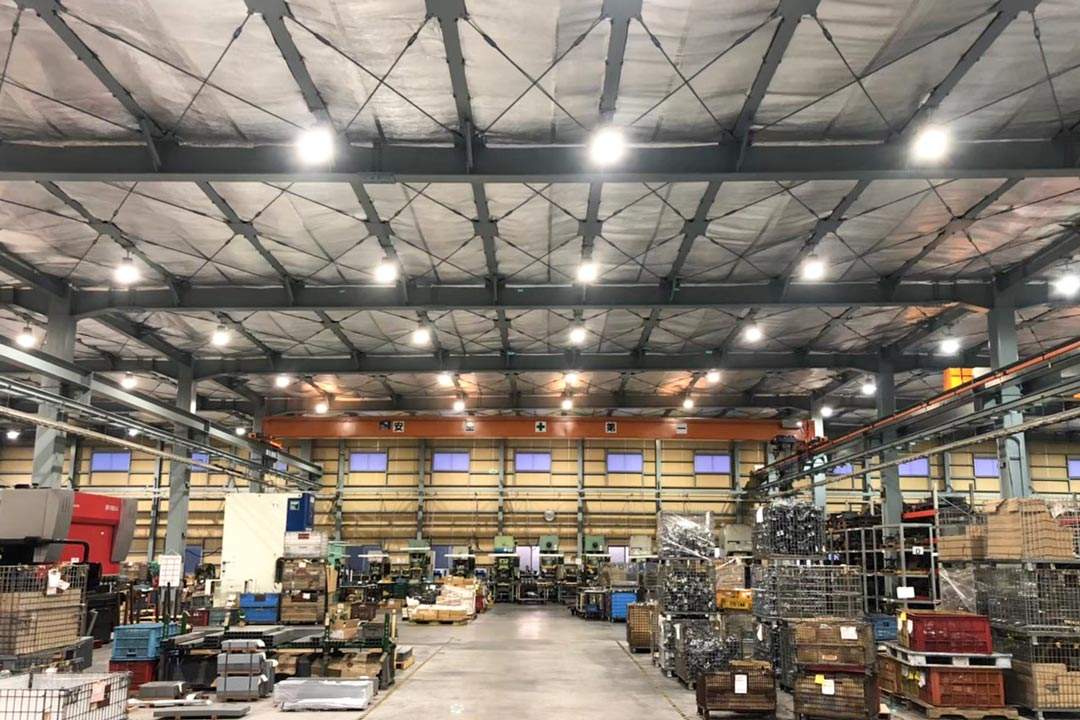
Our installation partner has worked on heat-control projects since 2008. Experience with factory roofs and ceilings informs diagnosis and site-specific installation planning.
View the factory project in Japan →Japan installation experience and Malaysia pilot data inform the assessment; each facility requires its own plan.
02 · SHAH ALAM, MALAYSIA
Installed in Malaysia.
Measured before and after.
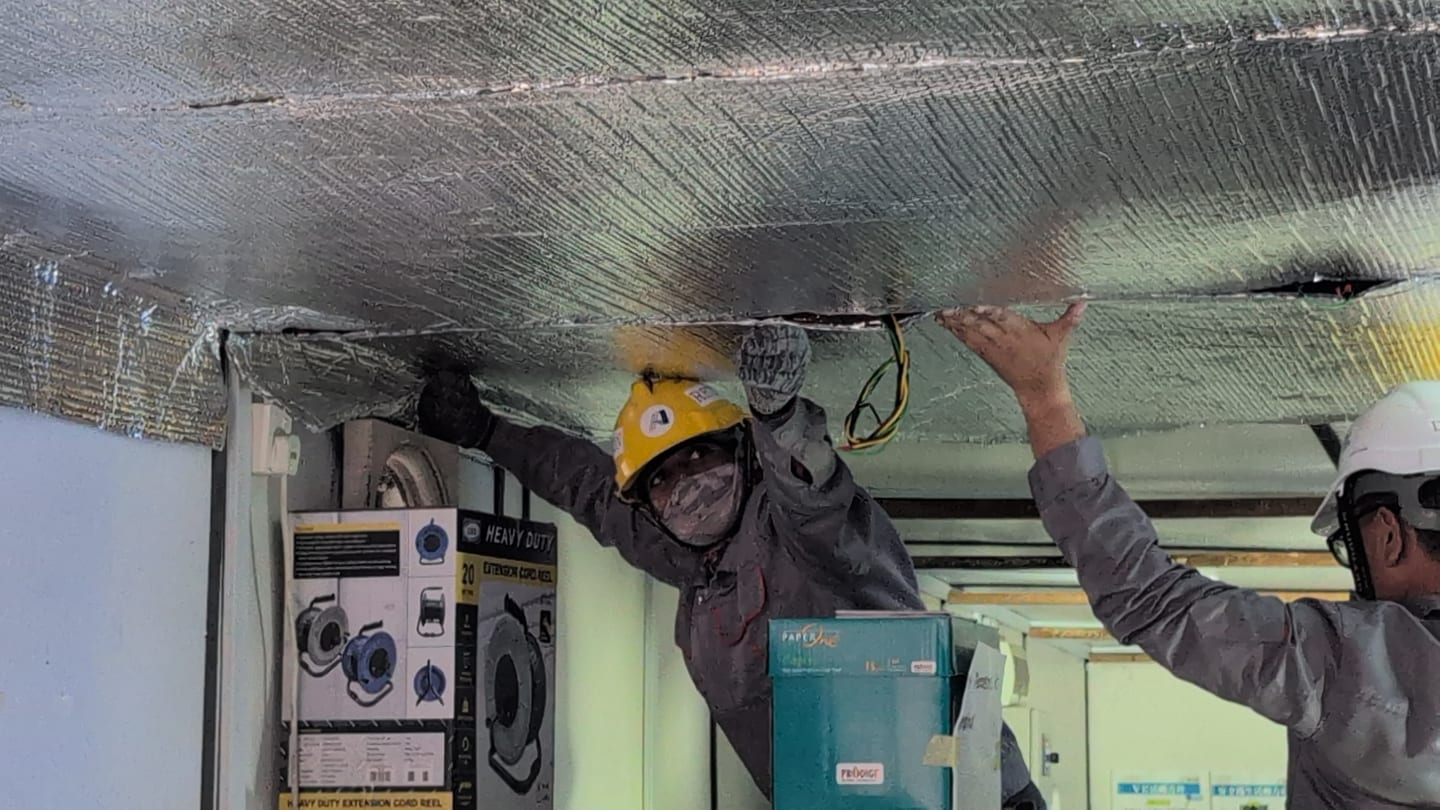
Reflective sheets were fitted to the roof and walls of one air-conditioned office in Shah Alam, Malaysia. AC power before and after installation was compared by outdoor temperature.

03 · PROCESS
From diagnosis to verification.
- 01
Diagnose incoming heat
- 02
Measure conditions and AC operation
- 03
Design sheet, air gap and installation scope
- 04
Install with a site-specific team
- 05
Measure again and compare
The installation team and scope are determined for each building after a site survey, taking operation and safety conditions into account.
04 · TEAM & CONTACTS
Japan’s installation expertise.
A plan for your building.

SINGAPORE · ENQUIRIES
HouScape Inc.
Singapore enquiries and site-survey coordination, with diagnosis, measurement planning and installation arrangements.
info@h-scape.com
JAPAN · INSTALLATION EXPERTISE
R-CRAFT
With nearly 20 years in heat-control work since 2008, R-CRAFT brings extensive factory installation experience. That experience guides precise installation suited to each site.
Company website →
MALAYSIA · ENQUIRIES
ASAHI ENGINEERING
(MALAYSIA) SDN. BHD.
Malaysia enquiries and local engineering coordination. Singapore enquiries are handled by HouScape.
nobumasa-igi@asahikogyosha.co.jp+60 12-601 7874
05 · RELATED GUIDES
Understand the method and evidence.
What are radiant-barrier sheets? Materials and installation for factories
A reflective sheet is one part of a heat-control system. Understand the material, installation details and measurements before choosing a solution.
Read guide →Roof coating vs radiant barrier: choosing heat control for a Malaysian factory
Compare where coatings, reflective barriers, insulation and ventilation act before specifying work for a Malaysian factory or warehouse.
Read guide →Malaysia heat-control pilot: installed, measured and analysed
A Shah Alam office in Malaysia showed about 35% lower condition-adjusted estimated AC power after roof and wall work. Read the method and remaining limitations.
Read guide →06 · ENQUIRY
Tell us where
the heat is hurting.
Start with the location and heat problem. Area and AC details can be confirmed later. HouScape is your contact for Singapore.
info@h-scape.com